

| A: | 42 mm | - | 1.65" inch |
| B: | 44 mm | - | 1.73" inch |
| C: | 131 mm | - | 5.16" inch |
| D: | 19 mm | - | 0.75" inch |
| E: | 40 mm | - | 1.57" inch |



| A: | 42 mm | - | 1.65" inch |
| B: | 44 mm | - | 1.73" inch |
| C: | 131 mm | - | 5.16" inch |
| D: | 19 mm | - | 0.75" inch |
| E: | 40 mm | - | 1.57" inch |
| Filter: | No Filter |
| Brand: | Carsten Idskov |
| Product no: | M1235 |
Carsten makes about 150 pipes a year. The briar is mainly bought from Kent Rasmussen and, like him, Carsten takes pipes needed to be sandblasted to a workshop in Aarhus that specializes in sandblasting. The stems are made from ebonite, cumberland, or synthetic amber and the pipes are stamped Idskov DK along with the year of manufacture. No grading system is used.
The tooth from the sperm whale is a favorite of Carsten's and is used often used as an adornment on his pipes, but he also uses a lot of silver rings.
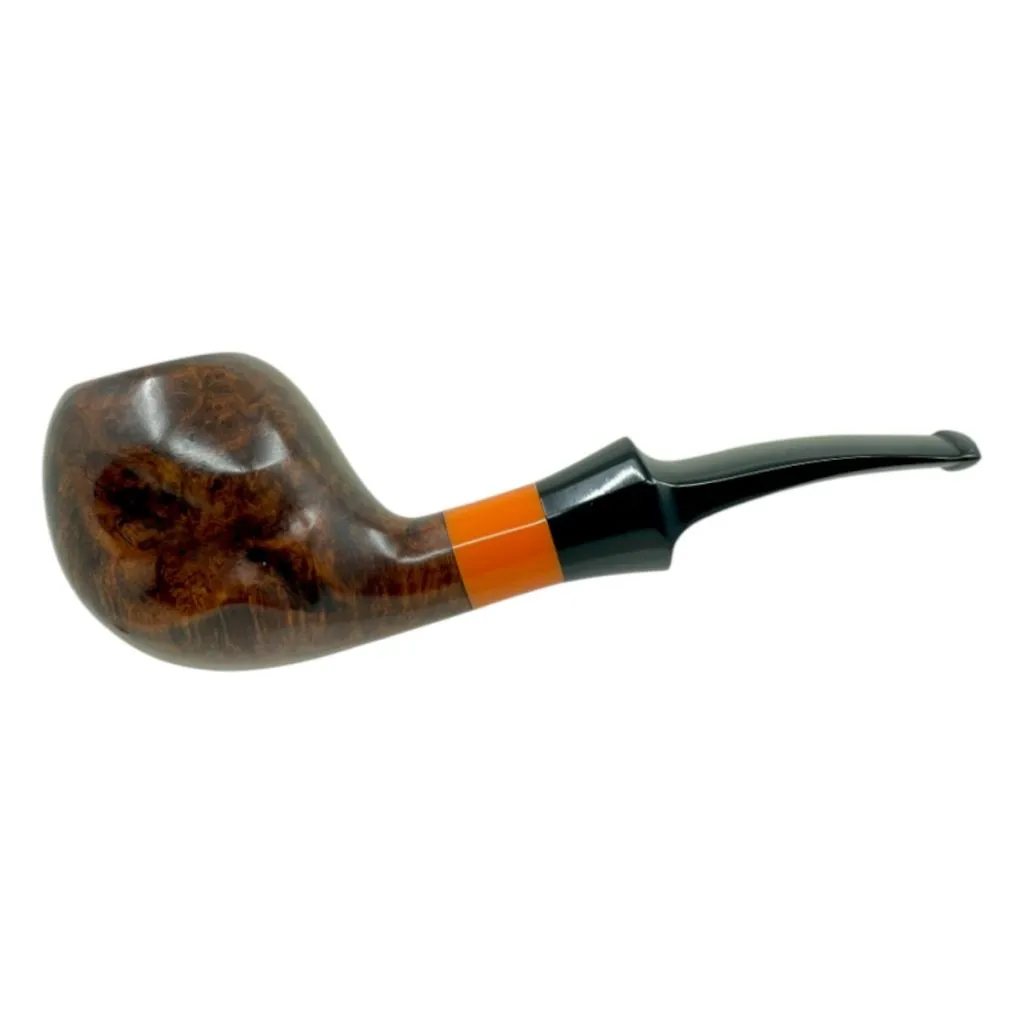
An odd little pipe, with what appears to be a butterfly rusticated on the left side of the bowl, and thereafter sanded smooth. Does it all work? Well as some wise man once said “there is a bore for every gilt” so we are sure that this will be the finest pipe in some collection out there.
Carsten makes about 150 pipes a year. The briar is mainly bought from Kent Rasmussen and, like him, Carsten takes pipes needed to be sandblasted to a workshop in Aarhus that specializes in sandblasting. The stems are made from ebonite, cumberland, or synthetic amber and the pipes are stamped Idskov DK along with the year of manufacture. No grading system is used.
The tooth from the sperm whale is a favorite of Carsten's and is used often used as an adornment on his pipes, but he also uses a lot of silver rings.